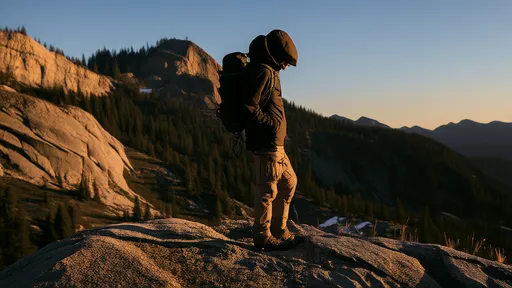
You're halfway up the mountain trail when the first raindrops fall. That cheap backpack you bought on a whim? The seam on the shoulder strap just gave way. We've all been there—stuck in less-than-ideal conditions with gear that just can't handle the pressure. Investing in truly durable outdoor equipment isn't about being fancy; it's about safety, comfort, and making sure your adventure doesn't get cut short by a gear failure.
Let's talk about the foundation of any good kit: your backpack. It's not just a bag; it's your mobile basecamp. The difference between a pack that survives one season and one that lasts for years often comes down to the fabric and the stitching. Look for materials like ripstop nylon or Kodra, which are woven to resist tearing. More importantly, examine the stress points. High-quality packs will have bar-tacking—those dense clusters of stitches—at all the major connection points like shoulder straps and hip belts. A brand like Osprey, for instance, is famous for its All Mighty Guarantee, literally repairing any damage for any reason, which tells you everything about their build quality.
Moving from your back to your feet, footwear is non-negotiable. A common mistake is choosing boots based on looks or a great price tag alone. The terrain dictates the tool. For rocky, uneven paths, you need stiff soles and robust ankle support, like those from Salomon or Merrell. For wet environments, a Gore-Tex lining is a game-changer, keeping your feet dry without sacrificing breathability. The real test? Take them out of the box and try to twist the shoe. If the midsole bends easily, it won't offer enough protection on rugged trails. A good break-in period is crucial, but persistent hot spots are a red flag that the last (the foot-shaped form it was built on) isn't right for you.
Your shelter is your sanctuary, and a failing tent in a storm is a nightmare scenario. When evaluating tents, the denier rating of the fabric (the thickness of the threads) and the hydrostatic head rating (its waterproofness) are your best friends. A 3000mm HH rating is solid for most rain, but for serious downpours, look for 5000mm and above. The pole structure is equally critical. Aluminum poles, particularly DAC aluminum, are the gold standard for their perfect balance of strength and light weight. I learned this the hard way on a windy coastal hike where a friend's tent with fiberglass poles snapped, while my MSR Hubba Hubba, with its DAC poles, weathered the gusts without a complaint.
Staying dry goes beyond your tent. Your outer layer is your first line of defense. The magic word here is "layering." A durable hardshell jacket made with a membrane like Gore-Tex or eVent will be your most reliable ally against wind and rain. Don't just trust the label; check the seams. Fully taped seams are essential—if the stitching holes aren't sealed, water *will* get in. This is one area where paying a premium pays off. A Patagonia Torrentshell or an Arc'teryx Beta LT might seem like a splurge, but their performance in a sudden squall will make you a believer.
Finally, let's not forget the smaller essentials that can make or break a trip. A reliable headlamp, like a Black Diamond Spot, is a safety must-have. Opt for one with multiple brightness settings and a red light mode to preserve your night vision. Your water filtration system is another critical piece. Pump filters like the Katadyn Hiker Pro are incredibly durable and effective, but even a simple Sawyer Squeeze, which has no moving parts to break, is a testament to robust design. I've seen plastic bottles crack and cheap filters clog, but my Sawyer has been a trusty companion for over five years of muddy streams and clear lakes.
Beyond the specs and the materials, there's a mindset that comes with owning durable gear. It's about building a relationship with your equipment. You learn its quirks, you maintain it properly, and it rewards you with reliability. This trust allows you to push your boundaries, to take on that longer trail or that steeper climb with the quiet confidence that your gear has your back. The initial investment fades away, replaced by the priceless value of countless memories made without interruption.
So, the next time you're gearing up, look past the flashy colors and the bargain bin. Think of your gear as a partner in your adventures. Choose the items built to endure, maintain them well, and they won't just handle your adventures—they'll enable them. Your future self, warm and dry at the summit, will be incredibly grateful you did.

By William Miller/Nov 13, 2025

By Christopher Harris/Nov 13, 2025
By Sarah Davis/Nov 13, 2025

By Emily Johnson/Nov 13, 2025

By Benjamin Evans/Nov 13, 2025

By Emma Thompson/Nov 13, 2025
By Victoria Gonzalez/Nov 13, 2025

By Daniel Scott/Nov 13, 2025

By Laura Wilson/Nov 13, 2025

By Sophia Lewis/Nov 13, 2025

By Sophia Lewis/Nov 13, 2025

By Noah Bell/Nov 13, 2025

By Lily Simpson/Nov 13, 2025

By Michael Brown/Nov 13, 2025

By Samuel Cooper/Nov 13, 2025

By Elizabeth Taylor/Nov 13, 2025

By Sophia Lewis/Nov 13, 2025

By Rebecca Stewart/Nov 13, 2025

By Victoria Gonzalez/Nov 13, 2025

By Lily Simpson/Nov 13, 2025
